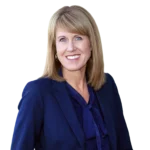

Q&A with Sherri Nielsen, President & Ceo of Easterseals Iowa.
Easterseals Iowa provides services and support to ensure that children and adults with disabilities and their families can thrive in our communities. The organization, which is one of 70 locally operated Easterseals affiliates across America, is celebrating its 100th Anniversary this year.
Financial Perspectives: Easterseals is such a familiar name. What might people be surprised to learn about your work and your impact?
Sherri Nielsen: We offer 21 different lines of service, so I hear a lot of “I had no idea you do that!” For example, our integrated childcare center serves children with and without disabilities to support working families. Our Rural Solutions program supports farmers who have acquired a disability through injury or illness, so they can continue to farm and play roles in their rural communities. The common denominator is to ensure that people with disabilities have the same opportunities that someone without a disability would have.
Before his strokes, Jack was very active in the Y and Park & Rec leagues. And he still wanted to play, not just sit on a bench. His therapists were supportive. It was clear that there was a need for spaces where kids could work on what they were doing therapeutically, but in recreational settings. That’s how we started. And we’re so proud of the impact we’ve had on the kids who’ve come through our program over the years.
FP: So you serve people of all ages.
SN: Our youngest client is 6 weeks old, and we serve people through the entire span of life.
FP: Do you benefit from collaboration with other Easterseals affiliates?
SN: Yes. We share knowledge and work together to advocate on behalf of individuals with disabilities. But each community gets to decide, based on community feedback, what services look like.
FP: You say you meet people where they’re at. What does that really mean?
SN: Meeting people where they’re at means we don’t make assumptions about what somebody needs or what support they may need to thrive. We recognize that everybody is at a different spot. And we try to build relationships that enable us to understand what their barriers are as well as what their dreams are. Then we provide personalized support to help them achieve the life that they want to have.
FP: Camp Sunnyside may be your most visible program. But it’s more than just the camp, isn’t it?
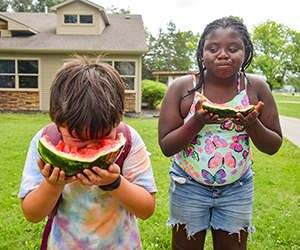
SN: We have a day camp that serves children during the day, and then we have our residential camps that serve people overnight. We also have a camp that focuses on teens with disabilities who need supervision.
FP: We can’t help but notice that Camp Sunnyside is a popular venue for corporate volunteerism. How easy is it for companies to become involved?
SN: We appreciate volunteers of all kinds – both company groups and individuals. And I’d invite anyone who’s interested to contact our volunteer coordinator for more information. We also post a few things on our website. There are different options available all the time. It could be playing a game of kickball or doing art with clients. It could be weeding flower beds or cleaning windows. We have an 80-acre campus, so we always have tons of work to do.
We have individuals who come and share information about their profession to the kids in our Child Development Center, so they can learn about different types of careers. We have community leaders who volunteer their time to serve on our Board of Directors.
For current volunteer opportunities email volunteer@eastersealsia.org
FP: How are you funded?
SN: Medicaid reimbursement is our primary source of revenue. We have some private pay to support our camps and Child Development Center. And we count on fundraising for the remainder of our budget.
FP: Do you provide any residential services?
SN: We support people in their homes 24/7, but we don’t own any of those properties. Our philosophy is that we should support people where they want to live.
FP: How many people do you serve?
SN: Every year, we serve as many as 3,500 people across Iowa.
FP: Where do you see Easterseals going through its next century?
SN: I’d like to say that in the next hundred years, we’ll be doing other things because individuals with disabilities will be totally integrated into our communities. But that may be a little optimistic. In the meantime, the need for mental health and crisis stabilization services continues to grow.
FP: Will advancements in medical science help people overcome some of their disabilities?
SN: We’ve taken huge strides forward – particularly through advances in adaptive technology. But there’s still a lot of work to be done.
 |
 |