


Graduation season is once again upon us. Being the father of four daughters, I’m well-versed in the pride, protocols, and parties that accompany graduations of all kinds – from kindergarten to high school, college, graduate programs, and more. Graduations are milestones. They celebrate past achievements in school and in life.
Another word for graduation is “commencement.” And lately, I’ve become very attracted to it. Rather than celebrating the past, commencement seems to look optimistically into the future and say, “What’s next?” Where do we go from here?
The concept of commencement has special relevance for me in 2026, because I am preparing to retire (or graduate) from a 32-year career of overseeing investments and providing financial counsel. It has been a great experience and privilege in more ways than I can express. Yet I am very excited to see what lies ahead.
Commencing is About the Future. Not the Past.
When I was looking to change careers in the early 1990s, a wise friend told me not to focus on the past or feel like I was being driven away from my previous situation. He encouraged me, instead, to visualize a clear picture of my future, focusing on positives and engagement.
In the years since, I have offered this same counsel to hundreds of clients and colleagues thinking about job changes, relocations, new residences, re-marriage after death or divorce, going back to school, and most commonly, retirement.
Framing change as a new beginning is aspirational and motivational.
What makes me happy?
I’ve enjoyed my career, my work, and the amazing people I’ve served and partnered with through the years. But I’m changing. And maybe the concept of what brings me happiness is changing, too.
As a result, I’ve been making a list of the relationships and personal interests that closely connect to my enjoyment, satisfaction, and purpose – to what social scientist Arthur Brooks calls the three keys to happiness. It’s a list that certainly feels good, including:
- Being more present in the everyday lives of my wife, children, and grandchildren;
- Having flexibility and time to renew and develop friendships;
- Reading, studying, writing, and perhaps teaching ideas related to how we can pursue a set of common goals, as opposed to perpetuating a culture of critique and polarization;
- And if I can play a bit more golf and ride a few more miles on my bicycle with my wife Kim, friends, and family in beautiful places, that would be good too!
Commencement is a Signpost Pointing to New Beginnings. Learning a new skill or trying new things can improve mental wellbeing.
Everything I’ve read about getting older has convinced me that I need to focus on deepening relationships, create more time for friends and family – doing things I genuinely enjoy with them, while also learning to do new things that they enjoy.
The catalyst, in my case, is that I’m not getting any younger. Available time is at a premium. Now is a very appropriate time to graduate from my current career and commence the next chapter.
New Beginnings come in a Variety of Shapes and Sizes.
Maybe you’re thinking about starting a new career or working at a new company. Maybe your family’s entering a new stage of life and you’re thinking about a new home. Kim and I worked through the new beginning of a new home three years ago. And it has been very much worth it. Our old house was fine for raising four daughters over 23 years.
But while we’ve become empty nesters, downsizing wasn’t on our mind. Our new home can welcome 10 adults and 10 grandchildren (plus maybe a grand dog or two) when we gather as a family!
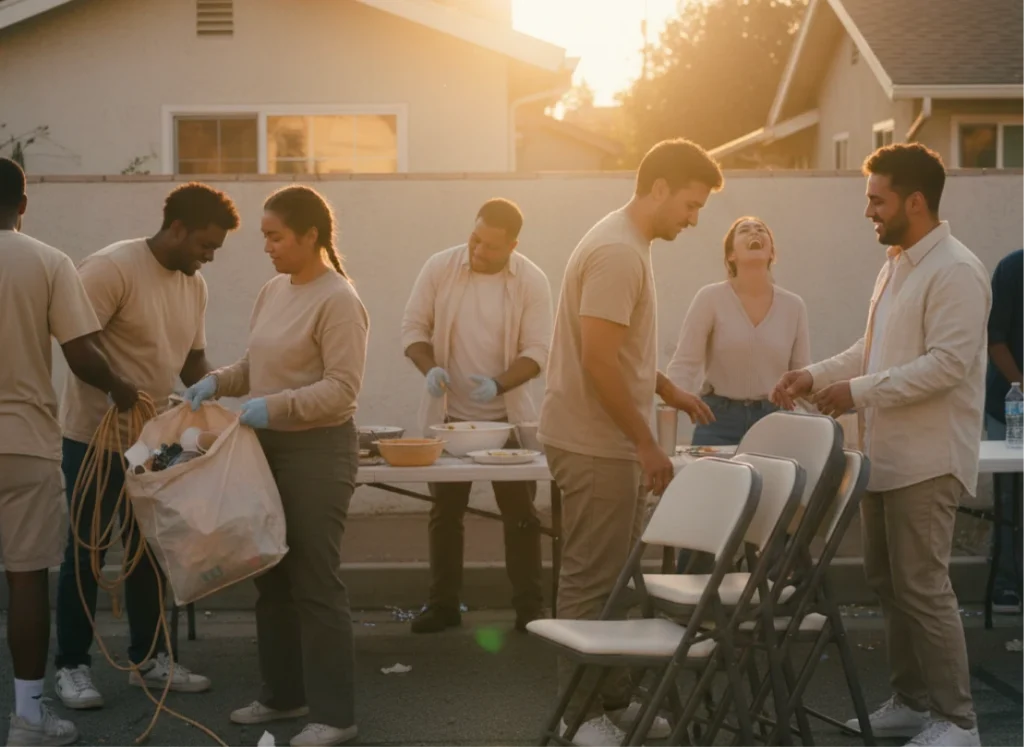
New beginnings can be as simple as starting to workout at a gym or committing to a more healthy relationship with food. Maybe you’d like to learn how to cook at a high level. Or finally take up golf. Or go back to school. Or volunteer.
Learning a new skill or trying new things can improve mental wellbeing. What interests or engages you? What brings you closer to achieving Brooks’s three keys to happiness -enjoyment, satisfaction, and purpose?
Graduating From Your Previous Experience
College or high school helped prepare you, at least in part, for what could be next. So have your lifetime experiences. The good and the bad. Structured learning. On-the-job training. Knowledge that results from living and doing. Everything in our past prepares us for what is next, even if the lesson was, “Let’s not do that again!”
Think about what brought you pleasure in the past. Did you like to build models or use tools when you were young? Perhaps this knowledge might be pointing you to a new hobby. I have a friend who retired from the cerebral career of consulting and took up welding as an art. When I first saw some of his pieces, I was shocked at how elaborate and beautiful they were. Somewhere in his past, he enjoyed working with his hands. And now, thanks to You Tube, he was able to translate this experience into a new beginning.
In my own career, I learned about the business of finance from the back office forward. After building systems for trading and accounting, I became an advisor out of curiosity about investments and financial planning. Later, I graduated from providing financial counsel to individuals and families and became our firm’s Chief Investment Officer, helping to oversee what is now approaching $5 billion in assets under management.
Over the past few years, I’ve grown more interested in behavioral finance, the science of how we humans evaluate our world, make decisions, and take actions. I also added the responsibility of authoring and delivering Foster Group’s perspectives on being a better investor.
During the COVID lockdowns, my writing and presentation work accelerated as we recorded weekly videos to help clients make sense of the pandemic and markets. I tried to provide good, up-to-date information without drama and with an eye for positive developments. Clients appreciated the content, as well as the tone. And I enjoyed the work.
Now, some four decades out from my college graduation, I realize that I’m enjoying this shift from financial analysis to a more literary style of work. And like my friend who decided to create welding art, my desire to write is not about making money. Rather, I see this new beginning as an activity I’ll enjoy, that will keep my mind active, and that may offer encouragement, while introducing me to new and interesting people.
What brings you closer to achieving enjoyment, satisfaction, and purpose.
The year ahead: Thoughts on Graduating, Commencing, and Completing the Transition.
As our editorial group was planning this issue of Financial Perspectives Magazine, they suggested that I write a series about my new beginning in a way that might help you pursue new beginnings of your own.
In this first article I’ve focused on my decision to pursue a new beginning. Over the next few months, I’ll be thinking about how to make good transitions, including leaving Foster Group and my colleagues in better shape than when I arrived. I’ll be thinking about putting things in place to jumpstart my next chapter. And in the final article, I’ll share what I’ve learned about passing the baton and giving generously to others, especially to those who will be taking responsibility for the work and the people I’ll be leaving in their capable hands.