


Let’s look at the Monte Carlo analysis and what it has in common with your financial plan.
Financial Security Starts with Cybersecurity
In today’s digital world, protecting your financial life requires more than smart investing. Cybersecurity is now a critical part of safeguarding your assets, identity, and long-term financial plan.
From password protection to personal backups, taking proactive steps can significantly reduce your risk of fraud, ransomware, and identity theft. Below are practical strategies to strengthen your digital defenses.
The Top Three Cybersecurity Habits Everyone Should Follow
Strong cybersecurity doesn’t require advanced technical skills. It starts with three core practices:
1. Use Strong, Unique Passwords
Every account should have its own password. Reusing passwords dramatically increases vulnerability if one site is compromised.
2. Enable Multi-Factor Authentication (MFA)
MFA adds a second layer of protection beyond your password. Even if a password is stolen, MFA can prevent unauthorized access.
3. Stay Alert for Scams
Phishing emails, text scams, and impersonation attempts are increasingly sophisticated. Always verify unexpected requests for personal or financial information.
Time is Takes a Hacker to Brute Force Your Password in 2024
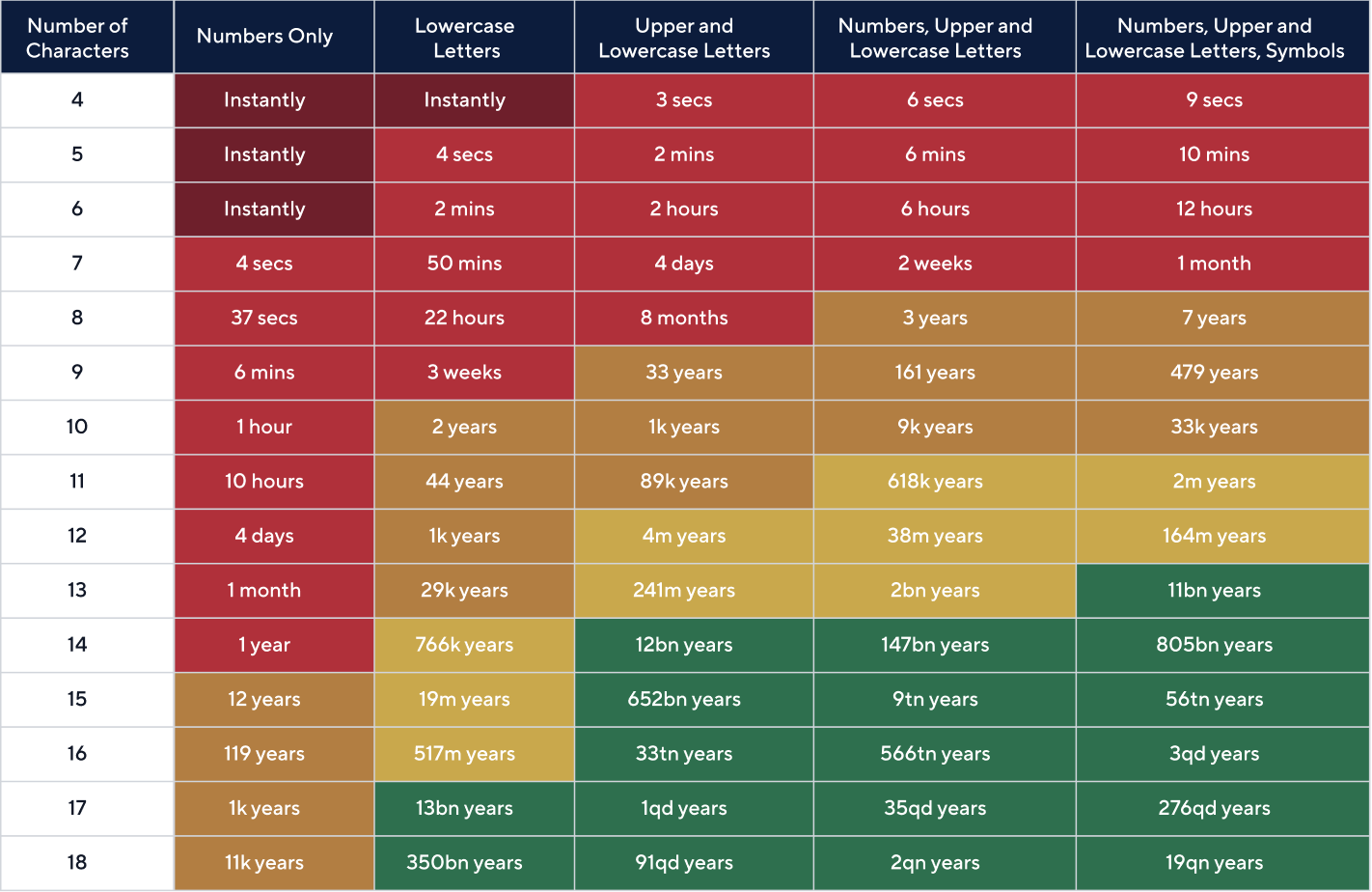
Why Password Length and Complexity Matter
Short, simple passwords can be cracked almost instantly. Adding length, uppercase letters, numbers, and symbols dramatically increases protection.
Instead of trying to memorize dozens of complex passwords, consider using a password manager.
Getting Started with a Password Manager
A password manager securely stores and generates strong, unique passwords for every account.
Step 1: Choose a Password Manager
Compare features and pricing. Common options include:
- 1Password
- Bitwarden
- Dashlane
- Keeper Security
- KeePassXC (for fully local, cloud-free storage)
Step 2: Create a Strong Master Password
Your master password protects your entire vault.
- Use a long, unique passphrase.
- Do not reuse it anywhere else.
- Write it down and store it securely (safe, safety deposit box, or other secure location)
Step 3: Stay Alert for Scams
- Import existing passwords.
- Organize them into folders.
- Update weak or reused passwords with newly generated ones.
Step 4: Enable Browser Integration
Install the extension for autofill and password generation. Disable your browser’s built-in password manager.
Step 5: Install the Mobile App
Access your vault securely from your phone. Turn off built-in mobile password saving.
Step 6: Secure High-Priority Accounts First
Focus on:
- Banking and investment accounts
- Email accounts (critical for password resets)
- Social media accounts
- Work and business systems
- E-commerce accounts storing payment details
Bonus Password Manager Security Tips
- Use secure password sharing features when needed.
- Enable MFA on all critical accounts.
- Consider using a separate app for multi-factor authentication codes.
- Use a dedicated email address for your password manager account.
- Never open your vault on a device you do not fully trust.
Protect Your Data with the 3-2-1 Backup Rule
Backing up your data protects you against ransomware, hardware failure, and corruption.
Follow the 3-2-1 Rule:
- Keep 3 copies of your data
- Store them on 2 different types of media (e.g., cloud + external drive)
- Keep 1 copy offsite
Additional best practices:
- Automate backups
- Encrypt sensitive data
- Periodically test your backups
Additional Proactive Cybersecurity Steps
Keep Operating Systems Updated
Security patches are frequently critical. Enable automatic updates on:
- Phones
- Laptops
- Routers
- Smart devices (security cameras, appliances, garage doors)
Monitor Your Online Footprint
Limit how much personal information you share publicly. Personal data can be used in targeted phishing attacks.
Avoid Public Wi-Fi
Public networks increase exposure to cyber risks.
- Disable auto-join features.
- Use a VPN when necessary.
Cybersecurity Is Financial Planning
Cybersecurity is not separate from financial planning—it’s foundational to it. Protecting your digital identity helps preserve your wealth, your privacy, and your long-term strategy.
If you would like to review your cybersecurity practices as part of your broader financial plan, our team is here to help.