


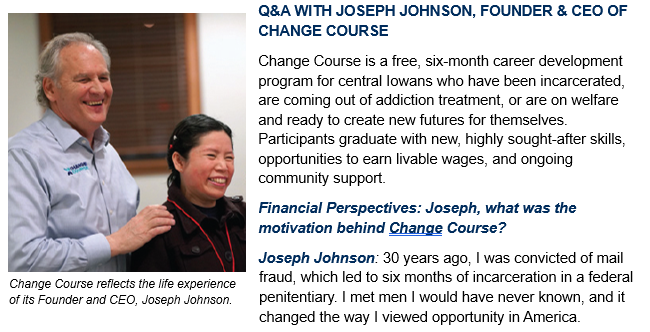
When I was released, I came back to a community that supported me in getting a job and rebuilding my life.
But others were less fortunate. Many came home with little support and few prospects for a meaningful career. Some survived by falling back into their old ways, stealing, selling drugs, or worse. Half or more were back in prison within a year.
Change Course was designed to produce better outcomes. It’s based on similar programs that have proven to be successful in other markets. Our first class began in November 2022.
FP: How does the program work?
JJ: There are two classes per year. One starting in July. One starting in November. We average about 20 individuals per class, with a maximum of 25.
The first seven weeks are focused on developing soft skills – math, language, basic computing, coping, and dealing with conflict. Participants receive coaching, training, and resources. The work is intense, four hours a day, four days a week.
Strength-finder exercises help them learn things about themselves that they’ve never known before. It’s beautiful to watch. And we help them develop career paths that match their passions and skills. The remainder of the program is devoted to career development and workplace certification through DMACC and other institutions. Finally, we facilitate their job searches through mock interviews, developing resumes, taking head shots – even helping with suits and dresses. Graduation is a big deal. Caps and gowns. The whole thing.
FP: In addition to the classes, how do you work to build community?
JJ: On Monday nights, we bring everyone together for family gatherings. There’s food, conversations, volunteer support folks, and usually an inspiring speaker they can relate to.
FP: What about support after graduation?
JJ: It’s important for us to create a new, healthy community for our graduates. We have regular alumni gatherings, like pizza nights. We also offer free advanced courses to enhance their leadership skills and financial literacy. Many alumni have asked to come back and work with our current classes, although we require that they be out of our program for at least a year and established in their new careers.
FP: Describe a typical participant.
JJ: We work with 18 to 55 year-olds. They often come on during probation or following addiction treatment. They could also be single mothers. Typically, they can’t find a job that pays enough to break away from government dependence. Or they can’t be hired because of something in their background.
FP: How do people apply?
JJ: We publicize the program and get referrals from parole officers, courts, business owners, churches, and individuals. Participants first must complete an interest form on our website at change-course.org.
They’re vetted to make sure they’re ready to take on responsibility and do the required work. While the program is free, it requires 100 percent commitment from those who are accepted.
FP: How is the program funded?
JJ: We rely on individual and corporate donations, as well as foundation and government grants. Most of our funding comes from those who want to make a difference in the community by developing people out of poverty.
FP: How does Change Course benefit the community?
JJ: The model we use was developed a decade ago in Denver. We were the fourth organization to adopt it. Now there are 18 of us across the country. In Denver, researchers studied their program’s return on investment to the community. They discovered that for every dollar invested, there was a $6.45 return – through taxes paid, reduced reliance on government benefits, and spending in the local economy.
In two years, we’ve graduated 43 people, who now earn an average annual income of $43,000 plus benefits. To date, job retention exceeds 90 percent.
FP: Do you need volunteers?
JJ: We have volunteers called Allies who commit to six months service. Each Ally works with two or three participants. Their job is be there when participants are struggling, to be available for phone calls, to check-in throughout the week, and to encourage them to keep going. They also join in the Monday night gatherings, where we eat together and celebrate victories.
Volunteer mentors and proctors are also needed to help build math and communication skills. These are skill-focused volunteers who might come in once a week for two or three weeks.
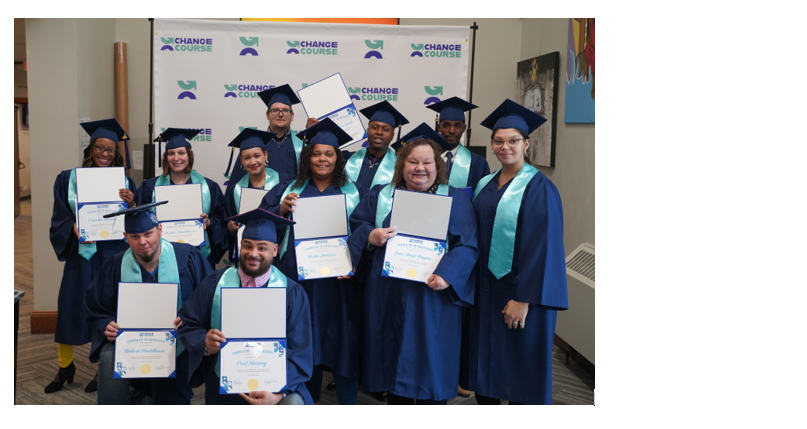
Gamma 2024 graduating class: Back Row: Kyle Widsrom, Benimana Gustave, Eric Ntúnzwenimana. Middle Row: Laquita Stanley, Alishia Huddleson, Julia Aguilar, Tasha Jackson, Lou Anne Dupre, Tatianna Bady. Front Row: Robert Huddleson, Carl Harvey